
Springtime Splendor: The Essential Guide to Spring Tree Maintenance in Canada
Key Takeaways
Inspection is Paramount: Always start your spring tree care with a thorough ground-level walk-about inspection, looking specifically for winter damage, structural cracks, fungal growths, or early signs of pests.
Target DDD Branches: Focus pruning efforts strictly on Dead, Diseased, and Damaged (DDD) branches before new growth fully emerges to maintain structural integrity and prevent rot.
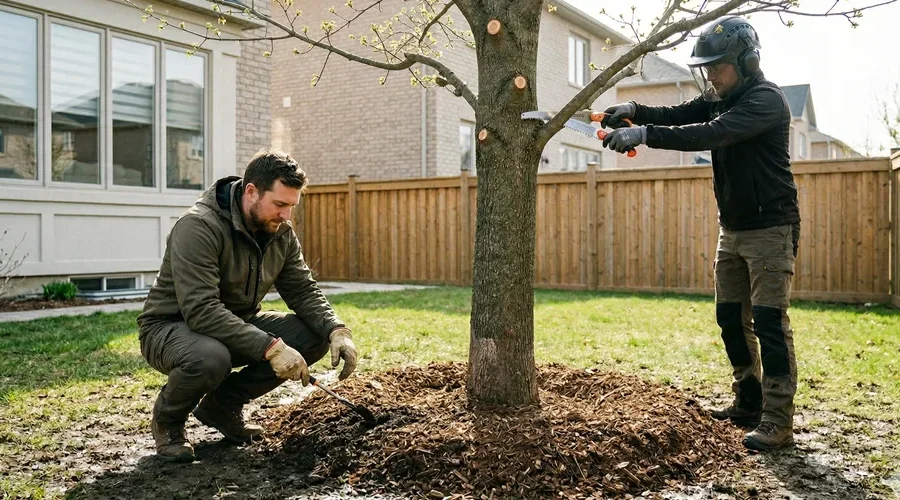
Mulch Correctly: Apply a fresh layer of organic mulch (like wood chips or shredded bark) in a 2 to 4-inch deep ‘donut’ shape, ensuring a clear gap of at least 3 inches between the mulch and the tree trunk to prevent moisture rot.
Prioritize Deep Watering: Even though spring is often wet, establish a deep-watering routine for newly planted and stressed trees, saturating the critical root zone rather than relying solely on frequent, shallow lawn sprinklers.
Verify Certifications: For major structural pruning, complex diagnostics, or any work near power lines, always hire an ISA Certified Arborist, like those found through Five Star Tree Care, to guarantee safety and professional standards.
The great Canadian thaw has finally arrived, and the landscape is waking up. As the snow recedes and reveals the saturated brown earth, the urge to “garden” becomes irresistible for many homeowners. We grab our rakes and plan our annuals, often overlooking the biggest, most valuable plants on our property: our trees. Your mature trees are significant assets, providing shade, increasing property value, and anchoring your entire landscape aesthetic. They survived the winter, sure, but the transition from freezing temperatures to the active growth of spring is a critical period that requires proactive care. Skipping spring tree maintenance isn’t just a missed cosmetic opportunity; it can compromise the health, safety, and longevity of your trees for the entire growing season. Spring is about preparing your trees for the challenges of summer, not just making them look nice. This comprehensive guide, tailored specifically for the Canadian context, outlines the essential steps to ensure your trees “spring” to life with maximum vitality.
The Spring Walk-About: Your Ground-Level Inspection
Before you pick up any tools, you must understand what you are dealing with. Canadian winters can be unforgiving, delivering heavy snow loads, ice storms, rapid temperature shifts (the dreaded freeze-thaw cycle), and desiccating winds. Your trees have likely endured some form of stress. Start your maintenance routine with a critical eyes-on inspection, beginning at the base of the trunk and working your way up into the canopy. This initial check-up sets the roadmap for all subsequent maintenance activities.
The ground is revealing. As the frost leaves the soil, look for signs of significant saturation or poor drainage near the tree base. If water is pooling or the ground feels unusually spongy weeks after the snow melt, your tree may be susceptible to root rot or fungal infections. Conversely, if the soil is severely cracked, the winter winds and dry spells may have stressed the root system. Also, look for signs of frost heaving, which can expose critical structural roots to the elements.
Moving your focus up the trunk, look for new damage. Large vertical cracks, known as frost cracks or “sunscald,” often appear on the south or southwest side of the tree. These happen when the active bark layer is warmed by the winter sun during the day, stimulates sap flow, and is then flash-frozen when the temperature plummets at night, causing the bark to split. While many trees can compartmentalize this damage, it creates a vector for diseases and insects if not managed. Check for damage from winter rodent feeding (like voles or rabbits) at the base. “Girdling”—where animals eat the bark layer entirely around the circumference of a branch or the trunk—can effectively starve the tree of nutrients and moisture.
Finally, look up into the canopy (or “crown”). Canadian ice storms are notoriously destructive. You are looking for broken, hanging branches (often called “hangers” or “widowmakers”) that pose immediate safety risks. Identify large cracks where major scaffold branches connect to the trunk. Look for evidence of fungal growth, like shelf-like “conks” or clusters of mushrooms near the base or on the trunk, which indicate internal decay. In early-budding trees, keep an eye out for initial insect activity, such as egg clusters or premature spotting on emerging leaves. Catching these problems early is the difference between a simple fix and a major intervention.
The Science of Spring Pruning
Pruning is arguably the most critical aspect of tree care, and spring is a fantastic time to do it. When you prune while the tree is breaking dormancy, but before its new leaves emerge, you gain maximum visibility into the tree’s architecture. You can see the structure without the obstruction of foliage, making it much easier to identify crossing branches, competitive “co-dominant” stems (where two main leaders compete for dominance), and structural defects. More importantly, the tree is about to surge into rapid growth, which means it will compartmentalize and seal pruning wounds very quickly, reducing the chance of rot setting in.
However, “spring pruning” does not mean “heavy pruning.” Your focus should be surgical. Start with the basics: target only branches that are Dead, Diseased, or Damaged. These three categories—collectively known as DDD—pose immediate health and safety risks. Dead branches break unexpectedly and provide entry points for decay. Diseased wood must be removed to prevent the pathogen from spreading into the main trunk. Damaged branches are structurally unsound and are likely to fail during the next summer storm.
Beyond the DDD basics, you can perform very light structural pruning. Remove branches that are rubbing against one another; this constant friction creates wounds that cannot heal. Eliminate “water sprouts” (the weak, fast-growing vertical shoots that often cluster around old cuts) and “suckers” (new growth emerging directly from the roots near the base). Removing these allows the tree to focus its energy on the main structural branches rather than wasting it on unproductive weak growth.
The big exception for spring pruning involves spring-flowering trees, such as lilacs, serviceberry, and some magnolias. These trees formed their flower buds last year and are waiting to bloom. If you prune them now, you are literally cutting off this spring’s flowers. For these varieties, the rule is to wait until immediately after the blooms fade before doing your structural pruning. For all other deciduous trees, keep your pruning conservative, safety-focused, and DDD-driven.
Mastering Soil Care: Mulching and Nutrients
In their natural forest environments, trees exist within a self-sustaining cycle of soil health. Their leaves drop, decay, and form a nutrient-rich layer of humus that suppresses weeds, retains moisture, and insulates the roots. Our suburban lawns break this cycle entirely. We rake away the leaves (removing the primary source of nutrition), plant competitive turf right up to the trunk, and expose the soil to extreme temperature fluctuations. To help your trees thrive in an urban or suburban setting, we must replicate those forest conditions. Proper mulching is the single most effective way to do that.
A common mistake Canadian homeowners make is creating “mulch volcanoes.” This is the highly detrimental practice of piling mulch high up around the trunk, resembling a cone. Mulch volcanoes trap excessive moisture right against the bark, creating an ideal environment for fungal and bacterial infections and enticing rodents (like voles) to chew on the base. Proper technique is simple but crucial: apply organic mulch, such as shredded bark or clean wood chips, in a “donut” shape, 2 to 4 inches deep, out to the “drip line” (the furthest extent of the branch canopy). Ensure there is a clear gap of at least 3 inches between the mulch and the tree trunk. This donut method maximizes soil moisture retention and weed suppression while protecting the trunk itself.
While trees don’t usually require complex fertilization like vegetable gardens, spring is the time to assess their nutritional needs. Canadian soils vary wildly, so blindly applying fertilizer can do more harm than good, encouraging weak, “leggy” growth that attracts pests. The only way to know for sure is to conduct a professional soil test. However, if your tree is struggling with stunted growth, unusually small or yellowing leaves, or is under stress, a “deep-root” fertilization may be beneficial. If you do choose to fertilize, prioritize a slow-release, low-nitrogen blend, applying it right as the buds are breaking so the nutrients are available when the tree needs them most.
Watering is another common spring care error. Spring in Canada can feel wet—the snow is melting and rain is frequent—but do not assume your trees are adequately hydrated. Most lawn irrigation systems only penetrate the top few inches of soil, which benefits the grass, not the deep root system of a mature tree. Late spring and early summer often introduce dry spells. Newly planted trees, or any tree that was stressed by winter, require deep watering. A deep, long soak once a week is far better than frequent, light waterings. The goal is to saturate the soil 12 to 18 inches down, specifically targeting the area around the “drip line” rather than just soaking the trunk.
Vigilance Against Spring Invaders: Pests and Disease
Your spring inspection needs to continue throughout the season, especially regarding pest and disease activity. Many Canadian insect and fungal pests activate right as the tree breaks dormancy. Pest and disease issues often strike stressed trees first, using winter-damaged areas as entry points. As the weather warms, pay close attention to the underside of emerging leaves and new shoot growth. Spring is prime season for initial infestations of aphids (often identified by sticky honeydew on the leaves), mites, and various scale insects. These sucking pests weaken the tree by draining its vitality.
Furthermore, spring’s typical mix of warm, humid, and wet weather creates perfect incubator conditions for fungal blights, such as apple scab, anthracnose, and various mildews. Early spotting on leaves, premature yellowing, or abnormal shoot development should be flagged immediately. While we often think of chemical sprays first, the key to spring management is integrated pest management (IPM). This means first identifying the pest, assessing the damage (can the tree tolerate it?), and encouraging natural predators, like ladybugs and lacewings. If you must use a treatment, early detection allows for highly targeted, less toxic options (such as insecticidal soaps or dormant oils) that minimize environmental impact. Proactive monitoring in spring is the cornerstone of healthy, pest-resistant trees all summer.
Knowing When to Call an Expert: The Professional Difference
The majority of spring maintenance (inspection, correct mulching, watering, and light pruning on small trees) can be managed safely by an engaged homeowner. However, recognizing your limits is crucial for your safety and the longevity of your trees. Many maintenance tasks involve significant risk or require specialized expertise. You should never attempt pruning that requires climbing high into a tree without professional equipment and training. Pruning from a ladder is equally dangerous and should be avoided. Any tree work that needs to happen near or above power lines must be handled exclusively by certified utility arborists. Attempting this work yourself is lethal.
Furthermore, structural defects that require major rigging (to lower large branches), “cabling” (to support weak branch unions), or “bracing” must only be addressed by a professional arborist. Complex diagnostic challenges, such as identifying the precise cause of internal decay or managing severe insect infestations (like the pervasive Emerald Ash Borer), are also outside the typical DIY scope.
For any complex, dangerous, or major structural tree maintenance in the Canadian spring, always hire an ISA Certified Arborist. These professionals, like those found through Five Star Tree Care, have the specific training, insurance, and equipment to perform tree work safely, ethically, and to professional standards. Certified Arborists have passed rigorous testing and have years of experience diagnosing diseases and pruning for structural health, not just cosmetic appearance. They can identify subtle signs of internal failure or root stress that are invisible to the untrained eye, protecting your property value and, more importantly, your family’s safety from potential tree failures. Investing in professional care during the spring sets your landscape up for success for the remainder of the growing season.